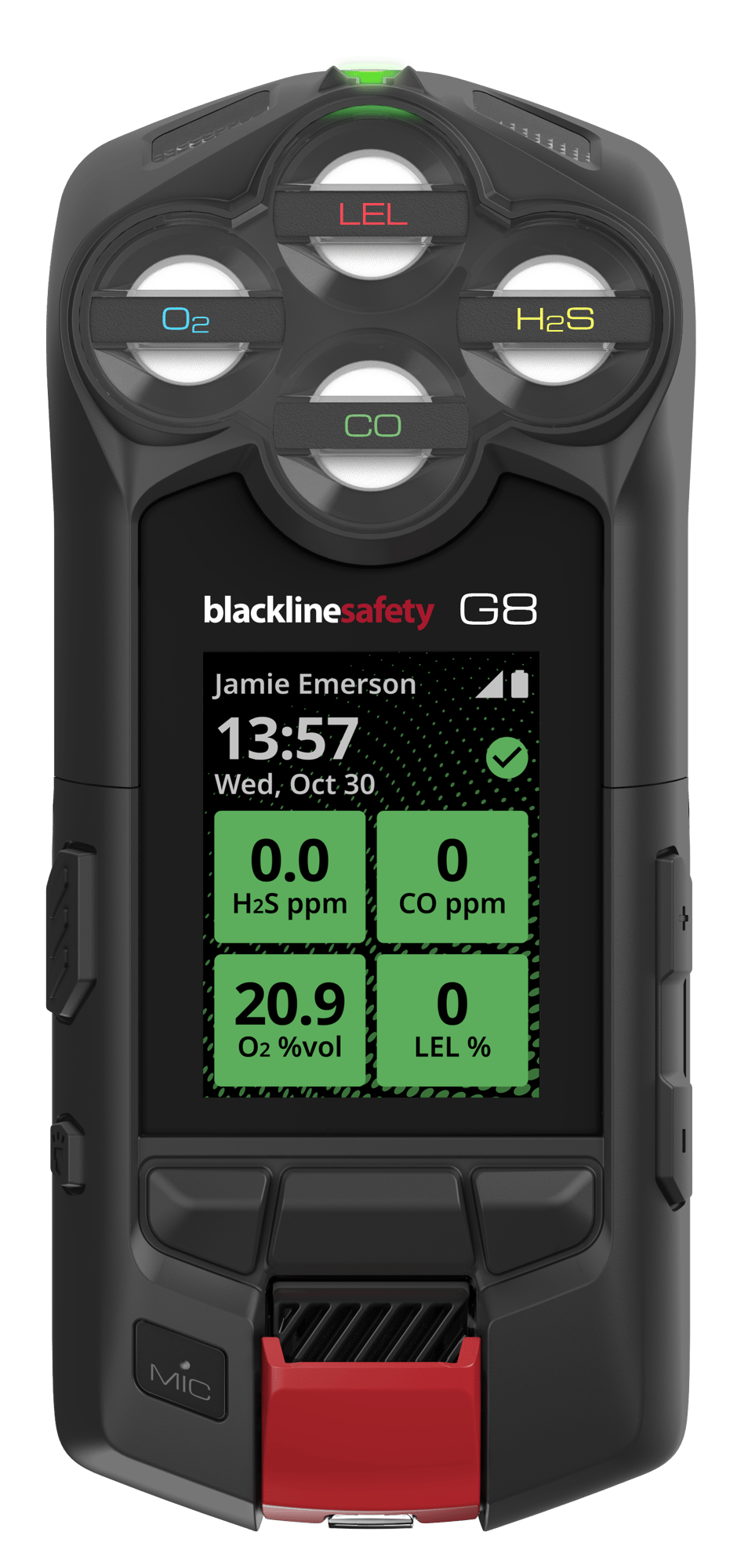
Blackline Personal Gas Detectors and EXO area monitors constantly detect both VOC ambient gas levels and the employee's location, reporting this data back to the cloud wirelessly via cellular or satellite connectivity. These devices utilize advanced PID sensors for VOC detection, capable of measuring very low concentrations of organic chemicals and other air pollutants that can affect indoor air quality.
Every reading streamed to the cloud ensures that all data is immediately available for visualization of PID readings on a map overlay, giving Industrial Hygienists and HSE Managers the ability to identify hotspots and problem areas and take proactive action to address an issue before it becomes an incident. This real-time monitoring is crucial for detecting VOC emissions from various sources such as hazmat, building materials, cleaning supplies, and industrial emissions.
PID per COV
The devices utilize photoionization detection (PID) technology, commonly referred to as a PID detector or photoionization detector, which harnesses UV light to ionize VOC gases—volatile organic compounds—with ionization thresholds below the photon energies emitted by the lamp. This advanced method, often integrated into PID multi-gas monitors, enables the detection of a wide range of organic solvents, including benzene, and other gases at remarkably low concentrations, down to the ppb range (parts per billion), far beyond what’s perceptible to human senses.
With high sensitivity, these calibrated tools measure VOC monitoring needs effectively, identifying compounds with high vapor pressure at room temperature. Many VOCs are notorious for their adverse health effects, potentially affecting the central nervous system, causing throat irritation, and necessitating robust personal protection strategies.
Though many VOC gases remain invisible, their emissions significantly degrade both indoor and outdoor air quality, posing environmental challenges. Characterized by their high vapor pressure, these compounds evaporate readily, mingling with other air pollutants—like oxygen-depleting substances—to form complex mixtures. VOC emissions often go undetected until they reach hazardous levels, making multi-gas monitors essential for detecting leaks and ensuring safety during confined space entry. Alongside other pollutants, VOCs can have serious health implications, emphasizing the need for precise measurement in ppm (parts per million) and comprehensive air quality management. From industrial processes to everyday household products, the diverse sources of volatile organic compounds highlight the critical role of advanced monitoring and control measures.
The G8 gas detection device ecosystem, featuring PID equipped multi-gas monitors, excels at detecting and monitoring VOCs, offering invaluable support in preventing and responding to chemical spills, detecting leaks, and maintaining air quality across various settings. By delivering real-time data on VOC levels with pinpoint accuracy, these devices empower proactive steps to safeguard human health, enhance personal protection, and ensure safer working environments—whether in industrial facilities or confined spaces requiring meticulous environmental oversight.
Applicazioni tipiche
- Sicurezza del personale
- Igiene industriale
- Contaminazione del suolo e bonifica
- Emissioni involontarie
- Applicazione della legge
- Risposta alle emergenze
- Rilevamento perdite
- Monitoraggio perimetrale
- Raffinerie e petrolchimico
- Monitoraggio della qualità dell'aria
Segnalazione di allerta storica
I dati relativi ai flussi di gas provenienti da ciascun dispositivo G8 generano un ingente volume di dati che viene elaborato dalla dashboard Blackline Live . Blackline Analytics agli utenti di ottenere informazioni dettagliate su come e dove vengono utilizzate le apparecchiature, dove si verificano i rischi e ogni test di funzionamento, calibrazione ed esposizione al gas viene registrato automaticamente.
Tecnologia innovativa per sensori di gas
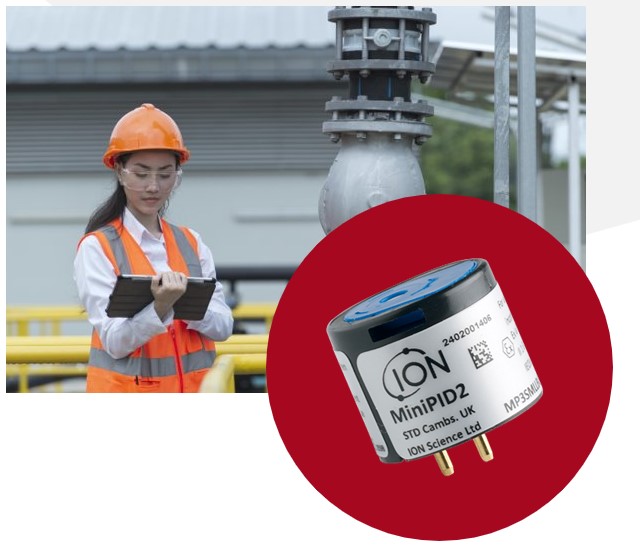
ION Science MiniPID 2 offre una risposta dinamica e affidabile a un'ampia gamma di composti organici volatili (COV) in una vasta gamma di applicazioni.
- • Resistente all'umidità
- • Design anti-contaminazione
- • Durata della lampada: 10.000 ore
- • Stabilità termica leader a livello mondiale
- • Lampada da 10,6 eV
- • Tabella interna dei gas con oltre 700 COV e composti tossici
- • Durata prevista > 5 anni
Il sensore MiniPID 2 include la tecnologia brevettata Fence Electrode Technology che garantisce risultati affidabili anche negli ambienti più difficili, grazie alle prestazioni leader nel settore in termini di resistenza all'umidità e al design anti-contaminazione, che protegge il sensore da umidità, polvere e aerosol. Progettato sia per il campionamento a diffusione che a pompa, MiniPID 2 offre un tempo di risposta eccezionale.
Dotato di una lampada di nuova generazione a lunga durata, il MiniPID 2 offre una stabilità eccezionale e prestazioni a lungo termine, garantendo un rilevamento affidabile per 10.000 ore di utilizzo. Di conseguenza, il MiniPID 2 richiede una manutenzione notevolmente inferiore rispetto ai sensori PID della generazione precedente.